How spaced repetition actually works, and where people get it wrong
The technique is well-supported by decades of research. Most people who try it quit before the part that makes it work.
Learning · Jul 2, 2026 · 2 min read
Spaced repetition is one of the more thoroughly researched learning techniques there is, going back to memory research from the 1880s and repeatedly confirmed since. It is also one of the most commonly abandoned, usually for the same reason.
The actual mechanism
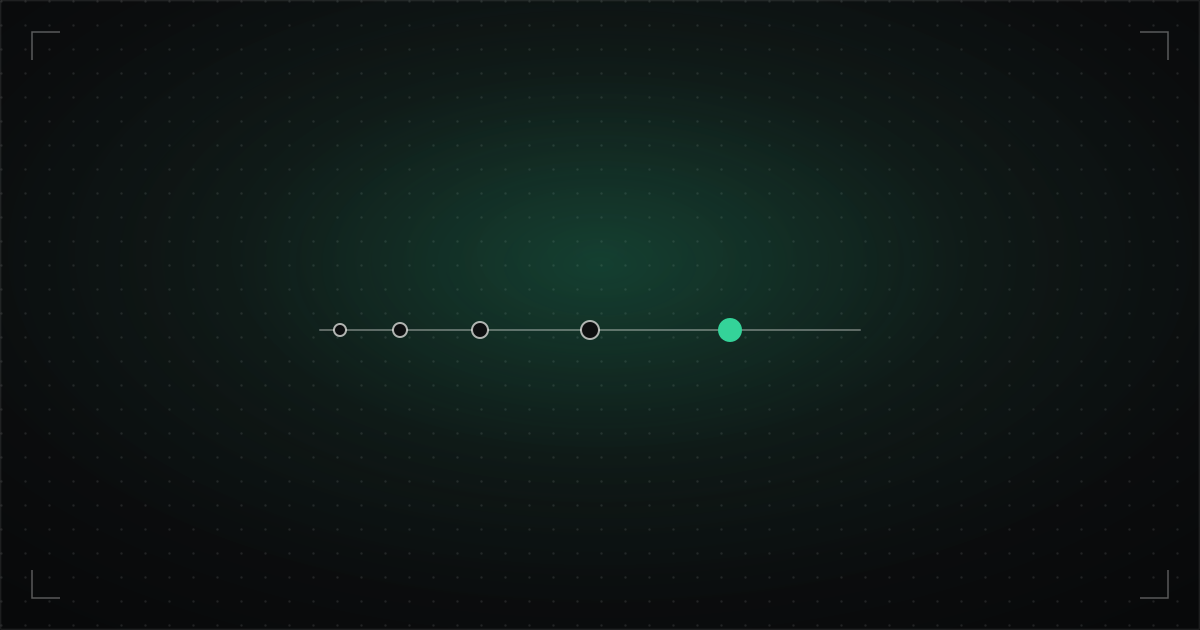
Reviewing information right before you are about to forget it, not right after you learned it, strengthens the memory more than reviewing it while it is still fresh. Each successful recall at the edge of forgetting pushes the next ideal review further out, which is why the intervals grow over time instead of staying fixed.
Where people get it wrong
Reviewing too early and too often, which feels productive because recall is easy and the material feels well-known, but produces weaker long-term retention than fewer, harder-timed reviews. A review that feels effortless is, by the mechanism itself, not doing much work.
The abandonment point
The technique's payoff is backloaded. Early on, spaced review feels slower than just rereading everything, because the intervals have not stretched out yet and the effort of forcing recall feels harder than passive rereading. Most people quit in that window, before the intervals widen enough for the time savings to become obvious.
What actually keeps people going
Tracking review load rather than just trusting a schedule. In most systems the number of daily reviews shrinks noticeably after the first few weeks as material graduates to longer intervals, which is the concrete evidence the technique is working. Watching that number drop is a better motivator than any explanation of the underlying memory research.
The practical takeaway
If a spaced-repetition habit feels effortful in week one, that is the technique functioning correctly, not a sign it is not working. The evidence it is working shows up in week four or five, and most of the benefit sits on the far side of the point where people give up.